01 / WHATWhat parabens do.
Parabens are preservatives. Anything that contains water — creams, shampoos, makeup — can grow bacteria and mould once it’s opened, and preservatives keep that in check. Parabens have been used for this for decades, and they’re also used in some foods and medicines.
The ones you’ll see most on cosmetic labels are methylparaben, ethylparaben, propylparaben and butylparaben, often two or more together. They’re easy to spot: the name ends in “-paraben”. The part in front matters, because the rules differ for each one.
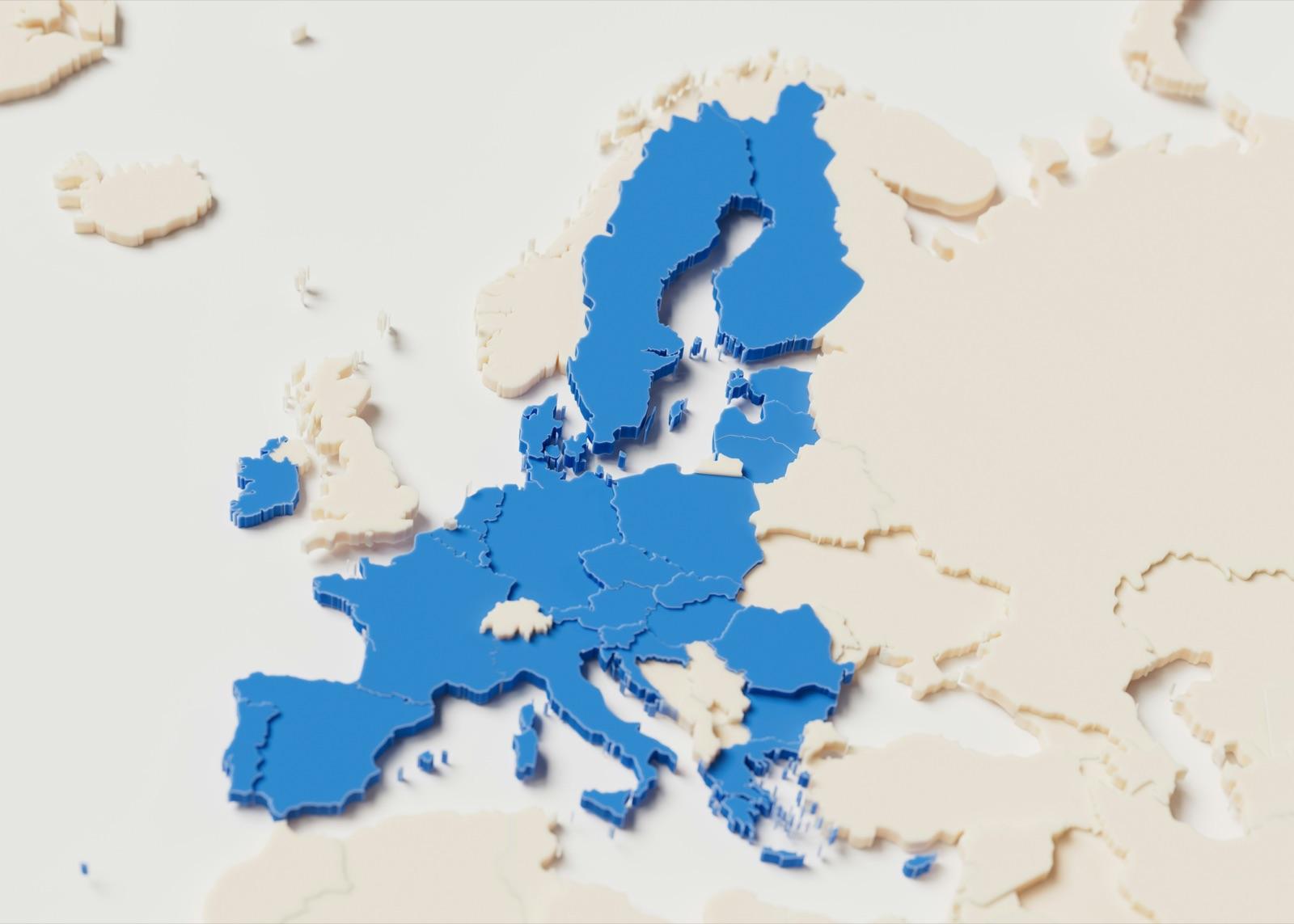
02 / EUThe EU limits — and why some were banned.
The EU sets maximum concentrations for each paraben in the Cosmetics Regulation (Annex V):
Each on its own, and 0.8% for any mixture of parabens.
For the two combined, within the 0.8% total for all parabens.
The tighter limit for propyl- and butylparaben came in with Regulation (EU) No 1004/2014, which applied to new products from 16 April 2015. The same regulation added a rule for babies: propylparaben and butylparaben can’t be used in leave-on products designed for the nappy area of children under three, and leave-on products for under-threes must say “Do not use on the nappy area.” The EU’s scientific committee had found no concern for children in general products, but couldn’t rule out a risk for babies under six months, whose metabolism is immature and whose skin in the nappy area may be damaged. The EU set the cut-off at three years for practical reasons — that’s how baby products are usually marketed.
A separate regulation, (EU) No 358/2014, banned isopropylparaben, isobutylparaben, phenylparaben, benzylparaben and pentylparaben. The reason matters: industry supplied little or no safety data, so “the human risk cannot be evaluated.” They were banned for lack of evidence of safety, not because they were shown to cause harm.
03 / ELSEWHERECanada and the US.
- Canada — no paraben is on Health Canada’s Cosmetic Ingredient Hotlist. In 2020, a draft federal assessment proposed that methyl-, propyl-, butyl- and isobutylparaben may harm human health under certain conditions, while ethylparaben, benzylparaben and isopropylparaben aren’t harmful at current exposure, and parabens in food pose no risk. If confirmed, the government said it would consider adding butyl- and isobutylparaben to the Hotlist. Health Canada’s page still describes that assessment as not final.
- United States — the FDA has no special rules for preservatives in cosmetics; parabens fall under the general requirement that cosmetics be safe. The FDA says it doesn’t have information showing that parabens as used in cosmetics affect human health. The Cosmetic Ingredient Review expert panel concluded in 2020 that 20 of 21 parabens are safe as used when total parabens don’t exceed 0.8% — it didn’t have enough data on benzylparaben.
04 / HORMONESThe hormone question, stated carefully.
Some parabens have shown oestrogen-like activity in laboratory studies. That’s the reason for most of the regulatory attention — and the evidence is genuinely mixed:
- Propylparaben — the EU’s Scientific Committee on Consumer Safety (SCCS) reviewed it again in 2021 and found it safe at up to 0.14%. It saw “some indications for potential endocrine effects” but said the evidence was not sufficient to regard it as an endocrine disruptor.
- Butylparaben — in 2020 it was added to the EU’s list of substances of very high concern under the chemicals law (REACH) for endocrine-disrupting properties with effects on human health. The SCCS found it safe at 0.14% in 2023, but in 2025 concluded that at that level it is not safe for children aged six months to ten years when several products are used together. It suggested lower limits for leave-on and oral-care products. Until the Commission amends the law, the legal limit stays at 0.14%.
- Methylparaben — it’s on the EU’s list of potential endocrine disruptors in cosmetics (data were called for in 2021), and the SCCS has confirmed it as safe at the current limits.
What about breast cancer? A 2004 study detected parabens in samples from 20 breast tumours. It didn’t measure healthy tissue for comparison, and it didn’t show that parabens cause cancer — the authors described it as a starting point for further research.
Real signals in the lab, tighter limits in law, no demonstrated harm in people at permitted levels. That’s why we rate propyl- and butylparaben Caution, not Avoid.
05 / VERDICTThe bottom line.
Methyl and ethyl are Fair; propyl and butyl are Caution.
Methylparaben and ethylparaben are Fair. Propylparaben and butylparaben are Caution because of their hormone-based limits — they matter most in leave-on products for babies and young children. The branched and aromatic parabens banned in the EU are Avoid. “Paraben-free” doesn’t make a product safer by itself: it still needs a preservative, so check what replaced them.
If you react to a product, the preservative is only one possible cause. A dermatologist can patch test to find out which ingredient is responsible.
06 / SOURCESSources.
- Regulation (EC) No 1223/2009, Annex V — entries 12 and 12a, paraben limits.
- Commission Regulation (EU) No 1004/2014 — 0.14% limit and the nappy-area rule.
- Commission Regulation (EU) No 358/2014 — ban on isopropyl-, isobutyl-, phenyl-, benzyl- and pentylparaben.
- SCCS, Final opinion on propylparaben (SCCS/1623/20), Regul Toxicol Pharmacol 2021.
- SCCS, Opinion on butylparaben (SCCS/1651/23) and children’s exposure (SCCS/1674/25).
- European Commission — Call for data on potential endocrine disruptors in cosmetics (Group B).
- Health Canada — Parabens (draft assessment).
- Health Canada — Cosmetic Ingredient Hotlist.
- US FDA — Parabens in cosmetics.
- Cosmetic Ingredient Review, Amended safety assessment of parabens (Int J Toxicol 2020).
- Darbre et al., Concentrations of parabens in human breast tumours (J Appl Toxicol 2004).