01 / WHATWhat sulfates do.
“Sulfates” on a shampoo bottle means a family of surfactants — cleansing agents that let water lift oil and dirt, and make foam. The four you’ll see most are sodium lauryl sulfate (SLS), sodium laureth sulfate (SLES), ammonium lauryl sulfate and ammonium laureth sulfate. They’re in shampoo, body wash, bubble bath, many toothpastes and household cleaners.
The names differ by one syllable. “Lauryl” sulfates are made directly from a fatty alcohol; “laureth” sulfates are ethoxylated first. That small difference matters for one thing — 1,4-dioxane — covered below.
02 / IRRITATIONIrritation is not the same as toxicity.
SLS is so reliably irritating that dermatology researchers use it on purpose: it’s the standard model for studying irritant contact dermatitis. That tells you it can strip and inflame skin — not that it’s poisonous.
The Cosmetic Ingredient Review (CIR) expert panel’s assessment of SLS and ammonium lauryl sulfate found that:
- Skin irritation in people rose directly with concentration, tested from 0.1% to 10%, and open contact was less irritating than skin kept covered.
- In eye tests, irritation also rose with concentration, and rinsing reduced it.
- Rats fed SLS in their diet for two years showed no abnormalities, and feeding studies found no chromosome damage.
Its conclusion: both appear safe “in formulations designed for discontinuous, brief use followed by thorough rinsing,” and products meant to stay on the skin should contain no more than 1%. For SLES and related salts, the panel found them to be skin and eye irritants but not sensitisers — meaning they don’t trigger allergies — and said they should be formulated to be non-irritating.
Toothpaste and mouth ulcers. A 2019 systematic review of four small crossover trials (124 participants) found that people with recurrent mouth ulcers had fewer, shorter and less painful ulcers with SLS-free toothpaste. The authors called for better trials, so treat it as limited evidence — but it’s a cheap thing to try if you get them often.
A cleanser strong enough to strip oil can strip your skin’s own oils too. Contact time is the dial: rinse-off is very different from leave-on.
03 / DIOXANE1,4-dioxane: the trace in SLES.
1,4-dioxane isn’t an ingredient anyone adds. It can form as a byproduct when ingredients are ethoxylated, so the FDA flags names containing “PEG”, “polyethylene”, “polyoxyethylene”, “-oxynol-” or “-eth-” — as in laureth sulfate. Lauryl sulfates aren’t ethoxylated.
The US National Toxicology Program considers 1,4-dioxane “reasonably anticipated to be a human carcinogen” based on animal studies; human data are inadequate to judge. The question for cosmetics is how much is left in the finished product:
The SCCS considers traces up to 10 ppm in cosmetic products safe for consumers.
Legal limit in cosmetics since December 31, 2022; 1 ppm in household cleansing and personal care products since December 31, 2023.
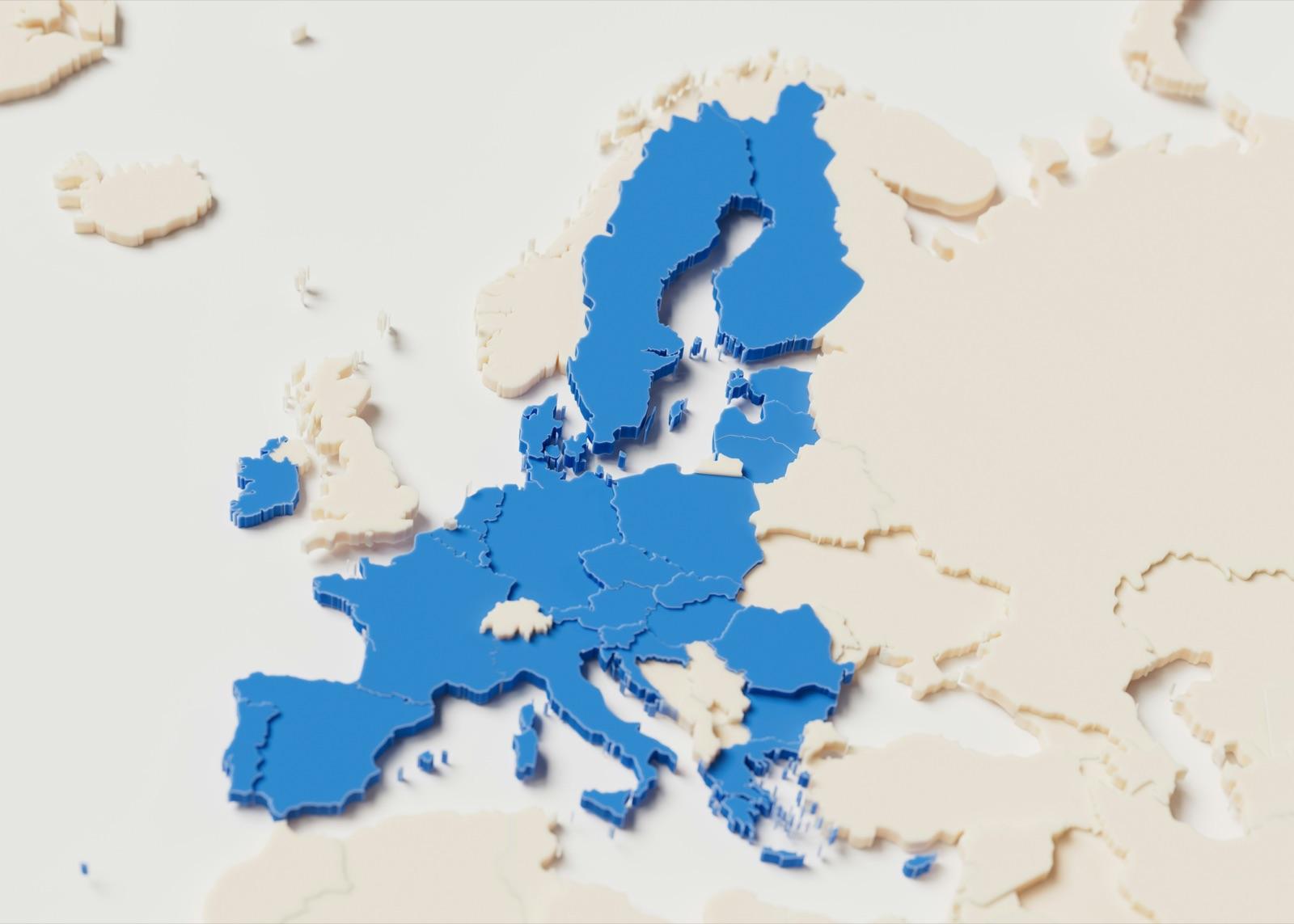
- European Union — dioxane is on the list of substances prohibited in cosmetics. Traces that are technically unavoidable under good manufacturing practice are allowed only if the product is still safe.
- Canada — 1,4-dioxane is on Health Canada’s list of ingredients prohibited in cosmetics.
- United States — there’s no federal limit. The FDA has monitored levels since the late 1970s, recommends manufacturers remove it by vacuum stripping, and reports a significant decline over time: in its 2008 survey, it found none in 80% of products tested. A 2018 survey of 82 children’s products found 2 above 10 ppm. FDA research also found that 1,4-dioxane can pass through skin from lotions, but evaporates readily, which further reduces the small amount available.
04 / CLAIMSWhat “sulfate-free” does and doesn’t tell you.
“Sulfate-free” usually means no SLS, SLES or ammonium lauryl or laureth sulfate. It doesn’t mean no surfactant — every cleanser needs one — and it doesn’t tell you how gentle the replacement is. Common substitutes include glucosides, isethionates, betaines and sulfonates such as sodium C14-16 olefin sulfonate.
Who might notice a difference:
- People with dry, sensitive or eczema-prone skin, especially with long contact (a face wash left on, a bubble bath).
- People with recurrent mouth ulcers, using an SLS-free toothpaste.
For most people rinsing a shampoo out after a minute, sulfates are a comfort question, not a safety one.
05 / VERDICTThe bottom line.
Sulfates are Fair in cosmetics — an irritant, not a toxin.
SLS, SLES and the ammonium versions are rated Fair in personal care. SLS is rated Caution in cleaning products. If your skin feels tight or itchy after washing, or you get recurrent mouth ulcers, a sulfate-free or SLS-free product is a reasonable thing to try. 1,4-dioxane is about manufacturing quality, not the ingredient itself; it’s prohibited as an ingredient in the EU and Canada, and traces in cosmetics have fallen over time.
06 / SOURCESSources.
- Cosmetic Ingredient Review, Final report on the safety assessment of sodium lauryl sulfate and ammonium lauryl sulfate (J Am Coll Toxicol 1983).
- Cosmetic Ingredient Review, Final report on the safety assessment of sodium laureth sulfate and ammonium laureth sulfate (J Am Coll Toxicol 1983).
- Cosmetic Ingredient Review, Amended safety assessment of sodium laureth sulfate and related salts (Int J Toxicol 2010).
- Lee & Maibach, The sodium lauryl sulfate model: an overview (Contact Dermatitis 1995).
- Alli et al., Effect of sodium lauryl sulfate on recurrent aphthous stomatitis: a systematic review (J Oral Pathol Med 2019).
- US FDA — 1,4-dioxane in cosmetics: a manufacturing byproduct.
- Regulation (EC) No 1223/2009, Annex II (entry 343, dioxane) and Article 17 (traces of prohibited substances).
- Health Canada — Cosmetic Ingredient Hotlist.
- New York State DEC — 1,4-dioxane limits for household cleansing, personal care and cosmetic products.