01 / WHATWhat titanium dioxide is, and where you’ll see it.
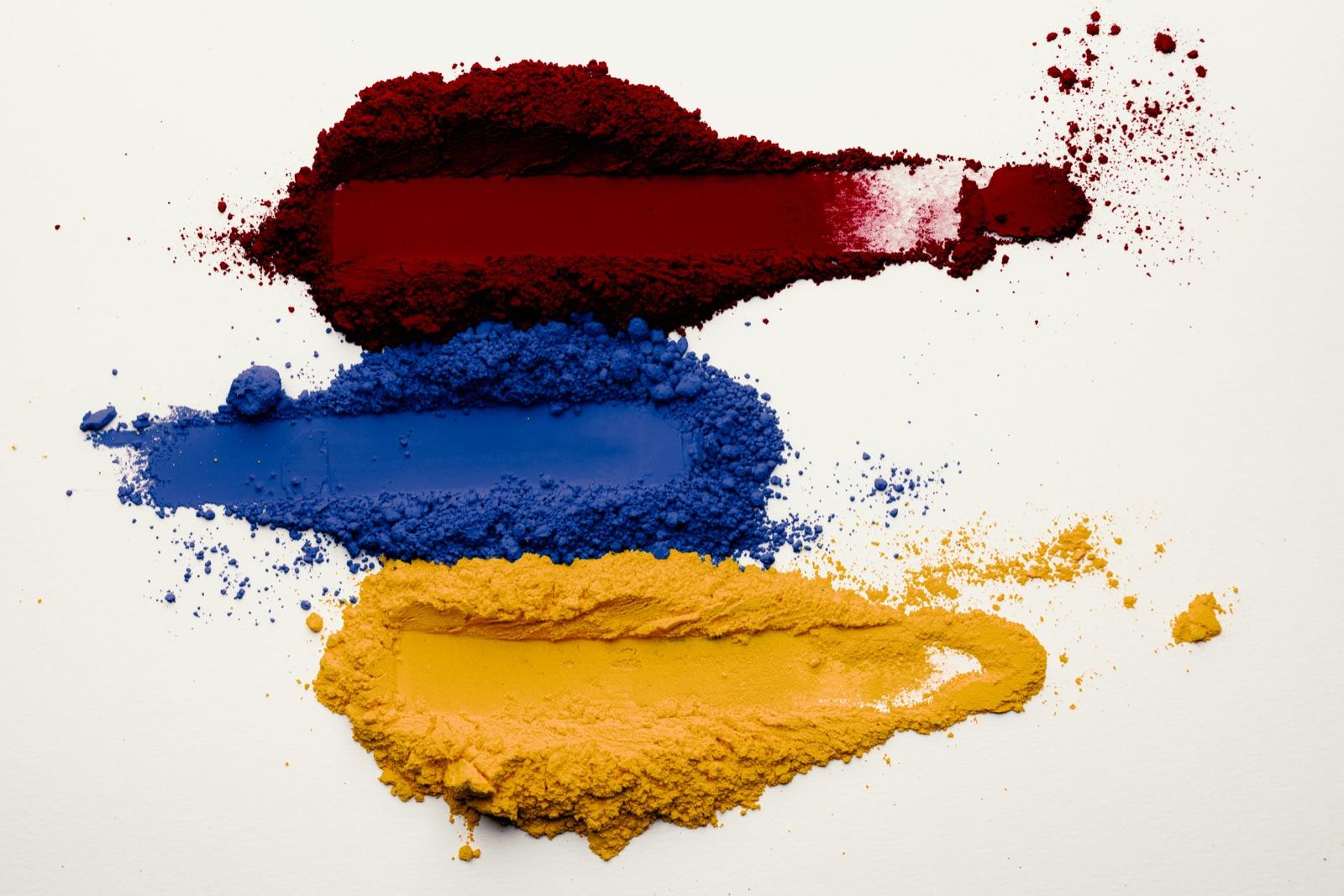
Titanium dioxide is a bright white mineral pigment. It doesn’t add flavour or nutrition — it makes things look whiter or more opaque. That’s why it turns up in candy shells, icing, chewing gum and some baked goods, and in toothpaste, makeup, creams and soap.
It goes by different names depending on the product:
- E171 — its food additive number in Europe.
- CI 77891 — its colour index number on cosmetic labels.
- Titanium dioxide (nano) — the nanomaterial form used in many mineral sunscreens. EU labels must add “(nano)” after the name.
- In the US, foods may simply say “artificial color” or “color added” instead of naming it.
02 / EUWhy the EU took it out of food.
In May 2021, the European Food Safety Authority (EFSA) published an updated safety assessment of E171. It was careful about what it did and didn’t find:
- No adverse effects on general and organ toxicity at doses up to 1,000 mg per kg of body weight a day, and no effects on reproduction or development at the highest dose tested.
- Absorption from the gut is low, but the particles may build up in the body.
- Titanium dioxide particles have the potential to cause DNA strand breaks and chromosome damage, though not gene mutations — and EFSA couldn’t identify a safe particle size or threshold.
On that basis, EFSA concluded that a concern for genotoxicity “could not be ruled out” and that E171 “can no longer be considered as safe when used as a food additive.” It didn’t identify a health effect in people; the problem was that the uncertainties couldn’t be resolved.
Removed by Regulation (EU) 2022/63, in force from 7 February 2022. Food made under the old rules could be placed on the market until 7 August 2022.
Kept provisionally as a colour in medicines to avoid shortages, while alternatives are developed — with a Commission review due within three years.
03 / ELSEWHEREWhy Canada and the US still allow it.
Other regulators looked at the same science and reached a different conclusion.
- Canada — titanium dioxide is on Health Canada’s List of Permitted Colouring Agents for specified foods, at levels consistent with good manufacturing practice. Health Canada’s 2022 state-of-the-science report found “no conclusive scientific evidence” that the food additive is a concern for human health. It gave most weight to studies that fed food-grade titanium dioxide in the diet, noting that many studies raising concern used forms that aren’t food-grade or weren’t given in food. It says it will keep monitoring the science.
- United States — the FDA allows titanium dioxide in food as long as it doesn’t exceed 1% of the food’s weight. The FDA says it didn’t identify genotoxicity concerns in the available data, and notes that the WHO/FAO expert committee (JECFA) concluded in 2023 that it’s safe in food. It is currently reviewing an April 2023 petition asking it to repeal that permission.
The disagreement isn’t about a proven harm. It’s about which studies count, and how much uncertainty is acceptable for an ingredient that’s only there for colour.
04 / COSMETICSMakeup, toothpaste and sunscreen.
The EU food decision doesn’t apply to cosmetics. On the skin, titanium dioxide does two jobs:
- As a colour (CI 77891) — permitted in EU cosmetics, permitted in the US including around the eyes, and not on Health Canada’s Cosmetic Ingredient Hotlist of prohibited and restricted ingredients.
- As a UV filter — allowed up to 25% in EU sunscreens (normal and nano forms combined) and up to 25% in Canada’s sunscreen monograph. The FDA has proposed that zinc oxide and titanium dioxide are the two sunscreen ingredients generally recognised as safe and effective.
The rules that do exist are about breathing it in, not putting it on skin. The EU only allows nano titanium dioxide in sunscreens that won’t expose the user’s lungs, and Canada’s monograph doesn’t accept nano forms in sprays or loose powders. Since 2021, EU rules have also allowed titanium dioxide powders with fine, inhalable particles only in face loose powders (up to 25%) and hair sprays (up to 1.4%), and kept them out of other products that could be inhaled. That rule followed its classification as a suspected carcinogen by inhalation — a classification EU courts later annulled (2022, upheld on appeal in August 2025).
05 / VERDICTThe bottom line.
Avoid in food, Fair on skin.
We rate titanium dioxide in food as Avoid because a major regulator has withdrawn it — not because harm has been shown in people. Canada and the US still allow it, and their scientists disagree with the EU’s reading. If you’d rather skip it, it’s only there for colour, so it’s an easy swap. In makeup, toothpaste and sunscreen it’s Fair; lotions and creams avoid the inhalation question that sprays and loose powders raise.
06 / SOURCESSources.
- Commission Regulation (EU) 2022/63 — removal of E171 from the EU list of food additives; transition dates; medicines review.
- EFSA Panel on Food Additives and Flavourings (2021), Safety assessment of titanium dioxide (E171) as a food additive.
- Health Canada — Titanium dioxide (TiO2) as a food additive: current science report.
- Health Canada — List of Permitted Colouring Agents (item T.2).
- 21 CFR 73.575 — Titanium dioxide (food) and 21 CFR 73.2575 — Titanium dioxide (cosmetics).
- US FDA — Titanium dioxide as a color additive in foods.
- Regulation (EC) No 1223/2009, Annex VI (UV filters, entries 27 and 27a) and Article 19 (“nano” labelling).
- Commission Regulation (EU) 2021/850 — conditions for titanium dioxide powders in cosmetics.
- Court of Justice of the EU, press release 99/25 (1 August 2025) — annulment of the carcinogen classification upheld.
- Health Canada — Sunscreens monograph.
- US FDA — Questions and answers on the OTC sunscreen orders.